

Walk gates
Single gates for a yard, a gangway or a side entry, framed in steel and infilled to match the fence. Latch height and swing set to how you actually use the opening.
Walk gates, double drive gates and commercial lot gates, built to the opening.
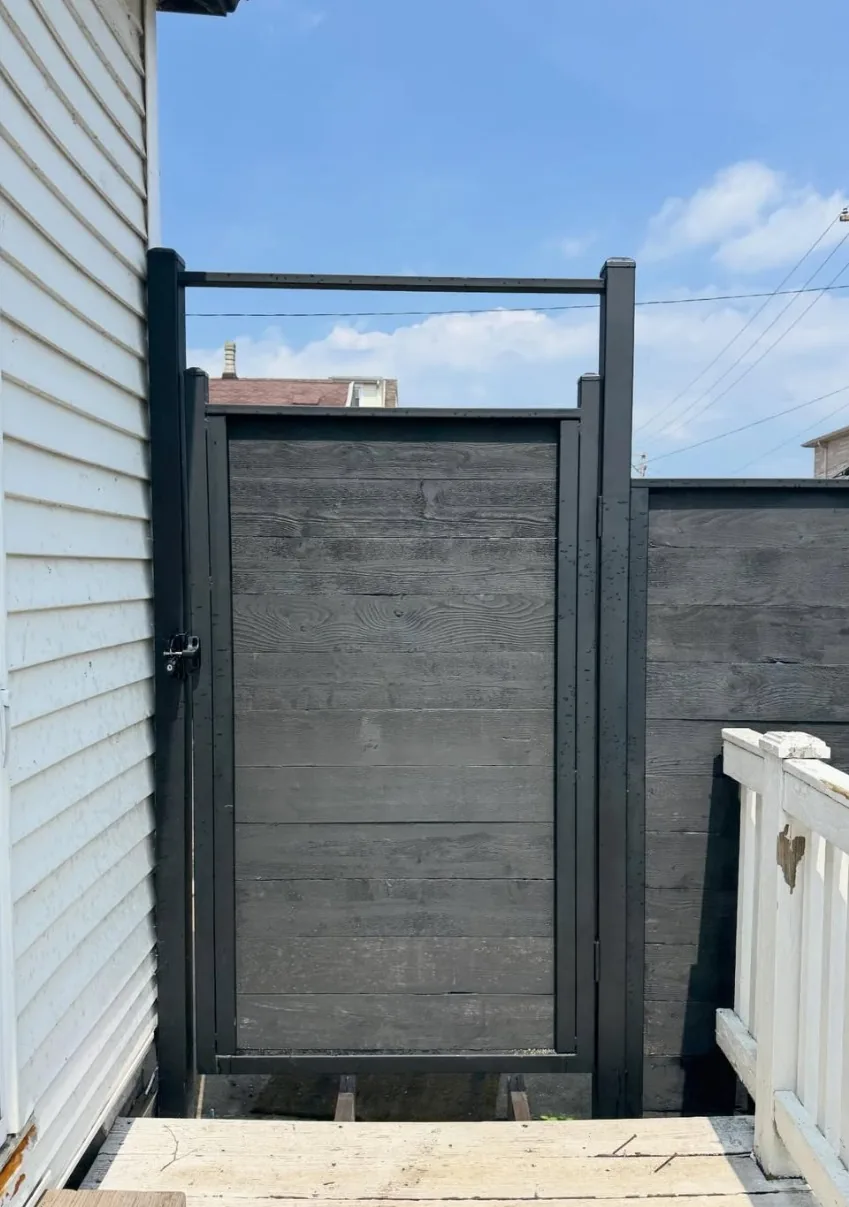
The gate is the part of the fence that has to work every single day, and it is the part that fails first when it is built as an afterthought. We build gates on welded steel frames and hang them on their own posts, sized and set for the weight they are carrying — then infill them with the same wood, composite, vinyl or steel as the run they sit in, so the line carries straight through the opening.
That covers a back-yard walk gate with a simple latch, a double drive gate wide enough for a car to clear the alley apron, and commercial lot gates that get opened and closed by people who are in a hurry. Hardware is chosen for the job — self-closing hinges where an enclosure needs them, drop rods and cane bolts on double gates, lockable latches where the property needs to be secured.
Options & styles
Single gates for a yard, a gangway or a side entry, framed in steel and infilled to match the fence. Latch height and swing set to how you actually use the opening.
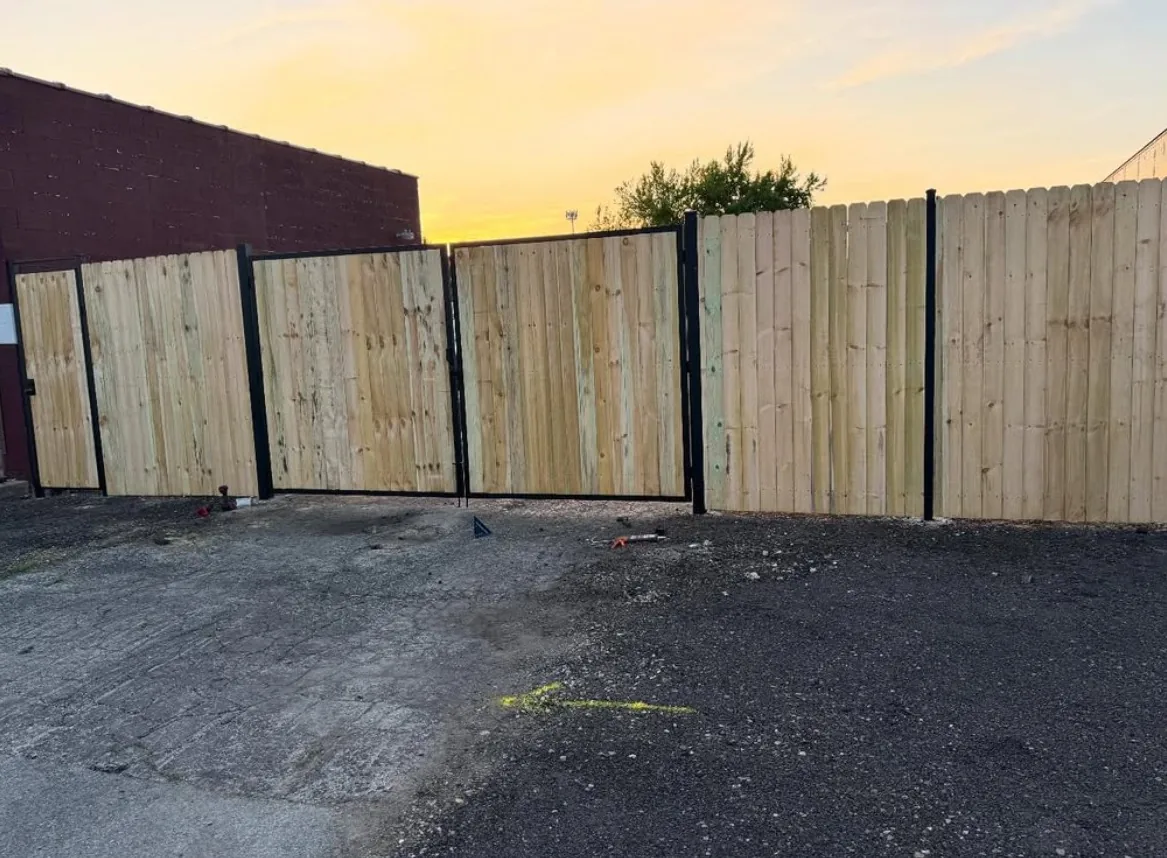
Two leaves that open the full width for a car, a trailer or a dumpster, with drop rods to hold the closed leaf and reinforced posts to carry the swing.
Heavier framing, heavier hinges and lockable hardware for parking lots, contractor yards and multi-unit buildings.
Self-closing hinges, gravity and lockable latches, cane bolts, keyed hardware. The parts that decide whether the gate is still easy to use next year.
What to expect
The same sequence on every project, from a forty-foot back-yard run to a commercial lot.
We walk the property with you, measure the run, talk through height, material and where the gates want to go, and put a written price in your hands. No charge and no obligation.
You pick the material and style. We mark the line you want the fence to follow, and utility locates get called before anyone puts a shovel in the ground.
Posts set to depth and plumbed, below the frost line where we are digging, or anchored to base plates where we are working on concrete. This is the part nobody sees and the only part that decides whether the run is still straight in five years.
Panels are hung to the grade of your yard rather than dropped flat on top of it, and steel work is fabricated to the measurements we took on site.
Gates hang on their own reinforced posts. Hinges, latches and drop rods get adjusted until the gate swings clean and closes on its own line.
Old fence and debris hauled out, the work area swept, and a walk of the finished job with you before we leave.
Material notes
Why people choose it
FAQ
A gate sags when the frame racks out of square or the hinge post moves. We build frames in welded steel and set gate posts deeper and heavier than line posts, which addresses both causes.
Wide enough for the vehicle plus room to turn into it, which in a Chicago alley usually means more clearance than people expect. We measure the approach as well as the opening before quoting.
Yes. We will check whether the existing posts can carry a gate — often the answer is a new gate post next to the old one — and build the leaf to match the fence as closely as the material allows.
Pool enclosures are held to a barrier code: self-closing hinges, a self-latching latch, and the latch mounted at the height the code requires. Confirm the specifics with your municipality and we will build the gate to it.
Free estimates
Send us the details and we will arrange a time to come measure. No charge and no obligation — and if you would rather talk it through, the phone is faster.
Other services
Where we build it
We install custom gates throughout Chicago and the surrounding suburbs. Pick your town for what the work usually looks like there.